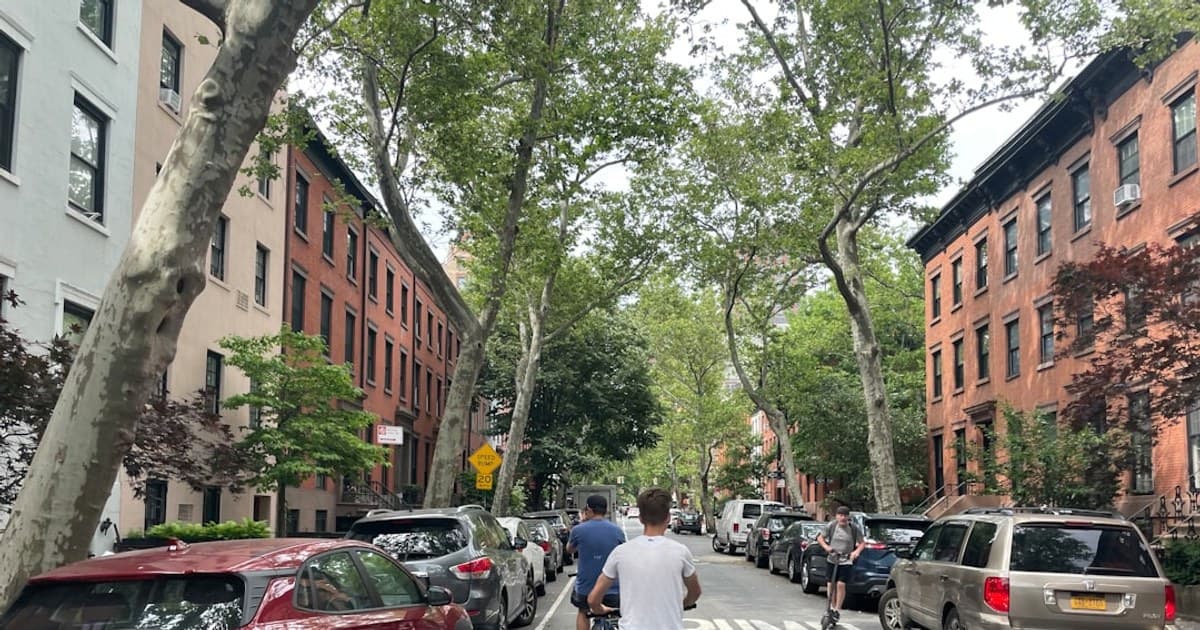

Flatbush was a town before Brooklyn was a city, one of the original Dutch settlements on the island, and the intersection of Flatbush and Church Avenues has been its center for more than three and a half centuries. Today it is a dense, loud, mostly Caribbean neighborhood south of Prospect Park, and it carries more history per block than anywhere else in this part of the borough. Most visitors pass through it on the way to somewhere else. That is a mistake worth correcting on a fall weekend.
Where Flatbush is
Nobody fully agrees. The broad version runs from Prospect Park in the north to Midwood in the south, with East Flatbush on one side and Kensington on the other. The Victorian blocks of Ditmas Park sit inside its western half and have their own identity. For a visit, the useful definition is the stretch of Flatbush Avenue and Church Avenue around their crossing, plus the residential streets on either side.
Getting there: the B and Q run along the Brighton Line with a stop at Church Avenue, and the 2 and 5 run down Nostrand Avenue to their terminal at Flatbush Avenue–Brooklyn College.
The church at the crossroads
The Flatbush Reformed Dutch Church, at 890 Flatbush Avenue on the corner of Church Avenue, is the reason the street is called Church Avenue. The congregation was founded in 1654, under orders from Peter Stuyvesant, and the site holds the city's record for the longest continuous religious use. The current Federal-style stone church went up between 1793 and 1798, designed by Thomas Fardon, with Tiffany Studios windows added later.
The churchyard is the quiet part. It is the burial ground of most of Flatbush's founding families, and the earliest legible headstone dates to 1754. The complex became a city landmark in 1966. Even from the sidewalk, the stone tower against Flatbush Avenue traffic is the neighborhood's best single image.
The school in the courtyard
A block south, at 911 Flatbush Avenue, Erasmus Hall was founded in 1786 as an academy with help from Alexander Hamilton, Aaron Burr and John Jay, and was the first secondary school chartered by the New York State Regents. When the architect C.B.J. Snyder designed the Gothic high school building in the early 1900s, he kept the original wooden academy building and wrapped the new school around it. It still stands in the courtyard, a white clapboard schoolhouse inside a castle, and it is one of the stranger sights in Brooklyn.
The movie palace
Further south, at 1027 Flatbush Avenue, the Kings Theatre opened on September 7, 1929, as one of Loew's Wonder Theatres, closed in 1977, and sat empty for decades. A $95 million restoration brought it back, and it reopened on February 3, 2015, with Diana Ross on stage. It now seats around 3,000 people for concerts, comedy and touring shows, and the lobby alone, gilded and enormous, justifies a ticket to almost anything.
Fall and winter are its busiest season. Check the calendar before a visit and build the evening around a show; the events hub carries Brooklyn listings.
Little Caribbean and Little Haiti
The city formally designated parts of Flatbush and neighboring areas as Little Caribbean in 2017 and Little Haiti in 2018, recognizing the Haitian and wider Caribbean communities that have shaped the neighborhood since the 1970s. Church Avenue and Flatbush Avenue are where that shows: Caribbean bakeries, roti and patty counters, and the best reason in this part of Brooklyn to come hungry. The pace on a Saturday afternoon is fast, and the food is serious.
The park edge
Flatbush meets Prospect Park at the Parade Ground, the long run of ballfields at the park's southern end. A walk from Church Avenue up past the Parade Ground and into the park is one of the better short fall loops in the borough, best in late October and November when the leaves are down to their last weeks.
A Saturday in Flatbush, in order
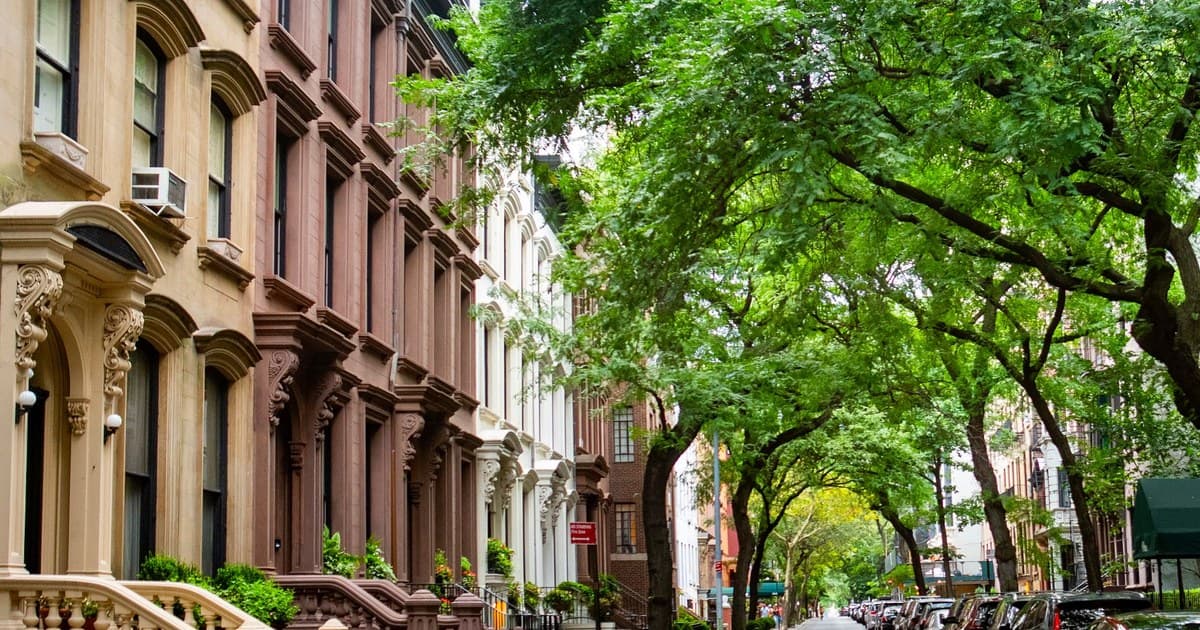
Come out of the Church Avenue station on the B or Q and walk east to Flatbush Avenue, where the stone tower of the Dutch Reformed church marks the old town center. Read the churchyard headstones over the fence, then walk a block south to Erasmus Hall, where the 1786 academy building sits inside the high school courtyard. Eat your way along Church Avenue in the early afternoon, when the bakeries are still stocked. If there is a show that night, the Kings Theatre is a short walk further south on Flatbush Avenue; if not, swing west into the Victorian blocks of Ditmas Park and loop back toward the Parade Ground before dark.
For adults 21+
Licensed retail has reached this part of Brooklyn more slowly than the brownstone neighborhoods to the north. The dispensary directory lists licensed shops by neighborhood, and licensed delivery covers Flatbush, prepaid with an ID check at the door. Flatbush Avenue also has its share of unlicensed storefronts, so verify licensed status via the OCM QR code at cannabis.ny.gov before buying anywhere.
Everything above is a public street, a churchyard, a school or a park. New York state law prohibits cannabis consumption on state-owned land and in public spaces, and the Parade Ground and Prospect Park fall under the city's smoke-free rules. A show at the Kings Theatre follows the venue's rules, which means no consumption inside. For anyone planning an edible for later, back home: start low, go slow.
The Flatbush neighborhood hub collects everything else on the site about the area.