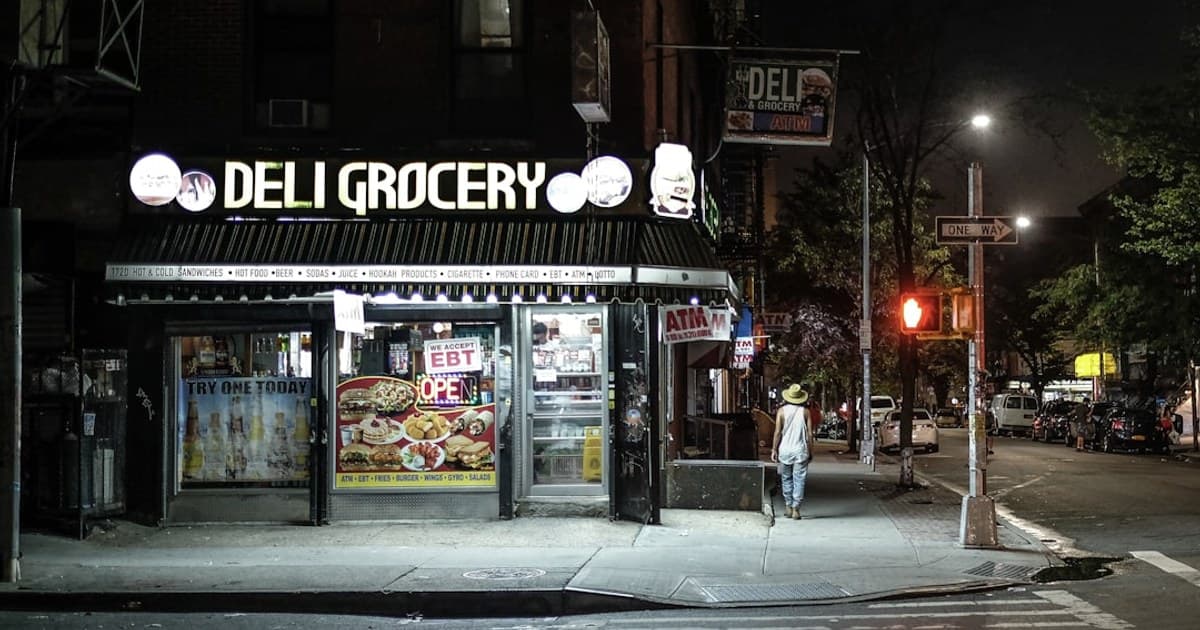
Walk any commercial corridor in Brooklyn and cannabis storefronts are everywhere. Green crosses in windows, leaf logos, bold signage. Most of them are not licensed dispensaries. The unlicensed-to-licensed ratio in Brooklyn has been widely reported as something like three-to-one or worse, and telling the two apart is a skill every 21+ Brooklyn cannabis consumer should have.
The Five-Point Checklist
A licensed New York dispensary has five visible markers. Missing any one is a red flag. Missing two or more means walk out.
The OCM QR code. Every licensed dispensary posts a QR code that links to cannabis.ny.gov and displays the shop's license on the state side. Scan it before you buy. This is the single most important check, and it takes 10 seconds. Unlicensed shops sometimes post fake QR codes that link nowhere or to spoofed pages, so confirm the URL is cannabis.ny.gov.
The license number. Posted visibly, usually near the door or at the counter. Legitimate license numbers follow New York's OCM format and can be cross-checked on the state's licensed-dispensary directory.
Lab-test paperwork. Licensed product comes with a Certificate of Analysis tied to each batch, THC and CBD potency, pesticide screens, heavy metals, mycotoxins. Shops will show you the COA for a product on request. Unlicensed shops typically cannot.
The tax. New York applies state excise tax and local tax to licensed cannabis sales. A receipt that shows no tax line, or a cash-only shop that refuses to give a receipt, is a flag.
Compliant packaging. Licensed product is sold in child-resistant packaging with the universal cannabis symbol, potency, batch number, and expiration information. Unlicensed product often comes in mylar bags with brand names mimicking national brands.
The Real Risks of Unlicensed
Unlicensed cannabis isn't just a legal-gray-area inconvenience. Product safety is the actual issue.
New York investigations have repeatedly found unlicensed cannabis contaminated with pesticides exceeding legal limits, heavy metals, mold, and in some cases products laced with synthetic cannabinoids. These are not academic concerns. They're documented seizures. Some consumers describe the legal-market premium as worth it for the lab testing alone.
The secondary risk is funding. Unlicensed shops pay no tax, support no social-equity program, and often source from out-of-state supply chains outside the OCM regulatory frame. Every dollar spent there is a dollar outside the framework New York built.
What Licensed Looks Like in Brooklyn
Brooklyn's licensed dispensaries span Bed-Stuy, Crown Heights, Williamsburg, Bushwick, Park Slope, Downtown Brooklyn, and a growing list of other neighborhoods. They look like real retail. Counters, budtenders, product displays, receipts, and the QR code in the window. If a shop looks like a chaotic smoke shop with candy-brand vape cartridges and no license visible, it isn't a dispensary.
Verify licensed status via the OCM QR code at cannabis.ny.gov before any purchase, every time, even at a shop you've been to before. Licenses can lapse, and the state's enforcement actions have occasionally caught shops in transition.
Compliance, Quickly
- 21+ only, government-issued ID required at every licensed Brooklyn dispensary
- Licensed retailers only, verify via OCM QR code at cannabis.ny.gov
- Check the license number, the COA, and the tax line on every receipt
- New York state law prohibits cannabis consumption on state-owned land and in public spaces
- Start low, go slow on edibles, verified potency is only useful if dosing is respected
Where to Go Next
- Brooklyn's CAURD dispensary guide for the licensed-shop map
- The Brooklyn delivery guide for licensed home-delivery options
*This is editorial, not legal advice. Always verify current cannabis laws at cannabis.ny.gov.*
Jay, Editorial Team
Jay pairs cannabis to setting — town guides, dining, festivals, outdoor adventures, and the regional editorial that ties cannabis into specific places and moments. Their writing anchors the town anchors, cabin and lodging coverage, music heritage and Tanglewood-arts pillars, and the lifestyle context that makes a region feel real.